
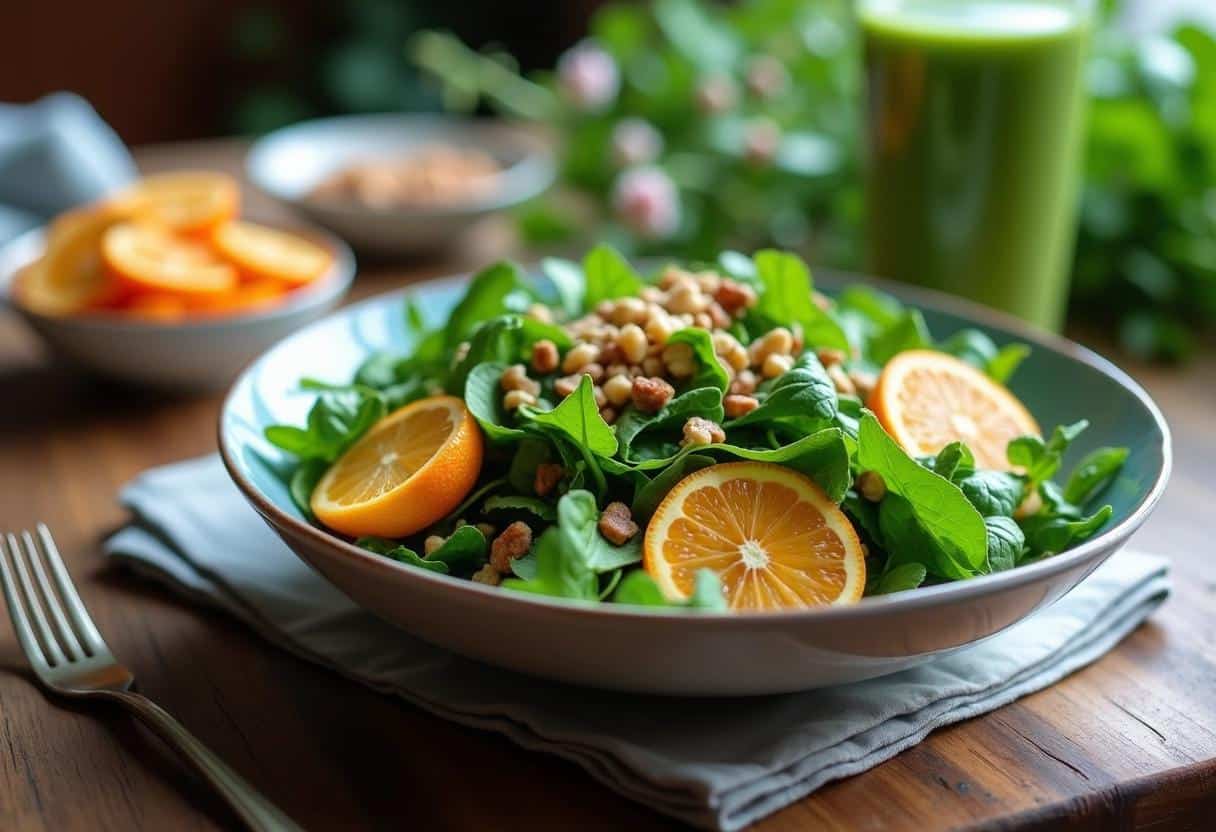
Research from William Paterson University in New Jersey is upending the superfood rankings. At the top, watercress—an aquatic crucifer with tiny leaves—earns the CDC’s maximum nutritional density score. Enough to push kale and goji berries off their pedestal and make us rethink our plates thanks to its vitamin A, vitamin K, and vitamin C, its antioxidants, and its glucosinolates. Salads, smoothies, soups, or pestos: there’s no shortage of ways to bring it to the table.
The study that’s shaking up our eating habits
Researchers at William Paterson University in New Jersey assessed the nutrient density of numerous plants to identify the healthiest food. A striking result: watercress earns a perfect 100/100 for nutritional density, outpacing often-cited staples like kale and spinach. This ranking is based on the concentration of protective nutrients per calorie, a key indicator for making more informed food choices.
Watercress, a little green treasure
An aquatic plant with delicate, peppery leaves, watercress belongs to the cruciferous family (cabbage, broccoli, arugula). Unassuming at first glance, it nonetheless has a long history in both cooking and herbal medicine. Its reputation as a superfood stems from remarkable nutritional richness packed into a very small volume and serving.
Standout nutritional benefits
What sets watercress apart is its exceptional nutritional density: it concentrates essential vitamins such as vitamin A (vision, skin), vitamin K (blood clotting, bone health), and vitamin C (immunity, cellular protection). It also provides antioxidants and glucosinolates, bioactive compounds studied for their anti-inflammatory and potentially anticancer effects.
All that while being very low in calories, making it a prime ally for eating healthy without weighing you down. Compared with other often-hyped foods (goji berries, avocados), it remains accessible, affordable, and requires little prep.
So what does that look like on the plate?
A few easy ways to enjoy it every day:
- Toss it raw into a salad for a peppery crunch.
- Blend it into a green smoothie for a nutritional boost that stays under the radar.
- Stir it into a soup, an omelet, a velvety soup, or a homemade pesto.
- Slip it into a sandwich or wrap to brighten the flavor.
Watercress pairs especially well with citrus, fresh cheeses, olive oil, nuts, and potatoes, lending itself to combinations that are both simple and indulgent.
A small change for a big difference
Regularly adding a handful of watercress to everyday meals is a concrete way to boost your micronutrient intake without loading up your plate. Its availability, versatility, and excellent nutritional profile make it a handy go-to for building more protective, well-balanced menus.

John is a curious mind who loves to write about diverse topics. Passionate about sharing his thoughts and perspectives, he enjoys sparking conversations and encouraging discovery. For him, every subject is an invitation to discuss and learn.


